
Technology Consulting Services: A Complete Guide for Startups and Scaleups
How to bridge the gap between business ambition and scalable technical reality — with the right partner alongside your team.
- Technology consulting connects strategic business goals to actionable architectures, roadmaps, and prioritized execution plans your engineers can immediately act on.
- The clearest signals you need an external consultant are business triggers — stalled growth, rising cloud costs, repeated missed releases, or an approaching funding round.
- A quality engagement runs in four phases — discovery, target-state planning, roadmap prioritization, and KPI-governed oversight — each producing artifacts the next phase depends on.
- Protecting long-term agility means owning your deliverables, designing for portability, and insisting on a documented exit plan for every critical platform.
- Tie every engagement to measurable KPIs from day one: lead time per change, deployment frequency, cloud cost per active user, and percentage of effort on new value.
- A boutique partner like Sentice embeds senior engineers as a culture-aligned extension of your team — end-to-end, outcome-focused, and committed to your roadmap.
Table of Contents
- What Are Technology Consulting Services?
- What Does a Technology Consultant Do Day-to-Day?
- How Does Technology Consulting Differ From IT Advisory?
- Comparing Engagement Types at a Glance
- When Is the Right Time to Bring in an External Consultant?
- What Does the Lifecycle of a Successful Engagement Look Like?
- What Deliverables Should You Expect From a Quality Engagement?
- How Do You Build a Technology Strategy That Actually Scales?
- How Do Technology Consulting Services Improve ROI?
- How Does Consulting Reduce Security and Compliance Risk?
- How Do You Avoid Vendor Lock-In and Protect Long-Term Agility?
- Common Mistakes to Avoid When Engaging a Consulting Partner
- What Pricing Models Should You Expect?
- How Sentice Maps Business Needs to Real Outcomes
- How Do You Measure Success of a Consulting Engagement?
- Frequently Asked Questions
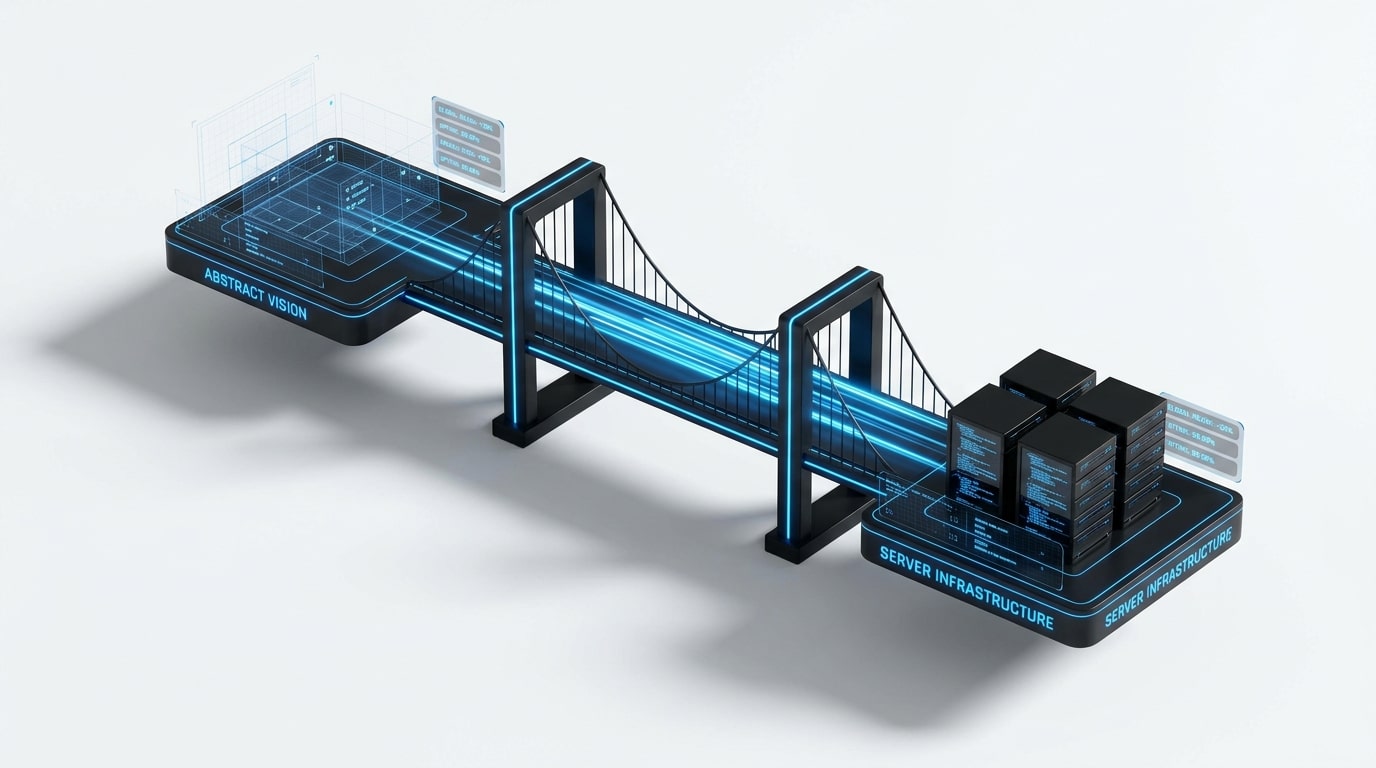
For today’s startups and scaleups, the gap between an ambitious business vision and a stable, scalable technical reality is where growth either accelerates or stalls. Technology consulting services are the modern bridge across that gap — connecting strategic objectives with the right architecture, governance, and execution plan. Whether you are navigating a cloud migration, preparing for a Series B, or trying to ship features faster without breaking what already works, the right partner translates complexity into clear, prioritized action.
This guide is built for founders, CEOs, CTOs, and Tech Leads who want a sharp, practical view of how technology consulting works, what it delivers, and how to choose a partner that becomes a true extension of your team. Throughout, you will find frameworks, comparisons, and real-world patterns drawn from the work Sentice does as a boutique tech partner to startups and scaleups building tomorrow’s solutions, together.
What Are Technology Consulting Services?
Technology consulting services connect strategic business goals with actionable IT roadmaps, target architectures, and governance frameworks. They are not limited to implementation — they cover risk mitigation, prioritization, and organizational alignment so that every technical decision serves a measurable business outcome. A strong engagement clarifies what to build, what to buy, in what order, and under which standards.
The deliverables move beyond slideware: documented architectures, prioritized initiatives, risk matrices, and budget plans your developers can actually execute. Done well, technology consulting closes the loop between executive intent and engineering reality, so your team stops debating direction and starts compounding progress.
Translates business goals into technology principles, platform choices, and a prioritized investment thesis — the foundation every other decision builds on.
Defines the target state: integration patterns, data flows, security baseline, and platform standards that make the strategy buildable by your engineering team.
Establishes decision rights, review cadences, KPI dashboards, and RACI structures so progress is measurable and course-corrections happen early.
What Does a Technology Consultant Do Day-to-Day?
A technology consultant interviews stakeholders, audits existing systems, surfaces legacy debt, and identifies bottlenecks that quietly slow delivery. Just as importantly, they translate between technical teams and non-technical leaders — turning founder ambition into engineering language, and engineering constraints into board-ready decisions. On a given week, that might mean facilitating an architecture review, drafting a build-vs-buy memo, defining KPIs, or chairing a steering committee.
When you work with an integrated technical advisor across the full lifecycle — from discovery through delivery — the role evolves from external opinion-giver to embedded partner who owns outcomes alongside your team. That shift from advisor to partner is what separates boutique engagements from generic consultancy models.
Ask any prospective consultant to show you a sample deliverable from a comparable engagement. If their output looks like a presentation with no engineering artifact attached, it will not translate into sprint work — and your team will be left to fill the gap.
How Does Technology Consulting Differ From IT Advisory?
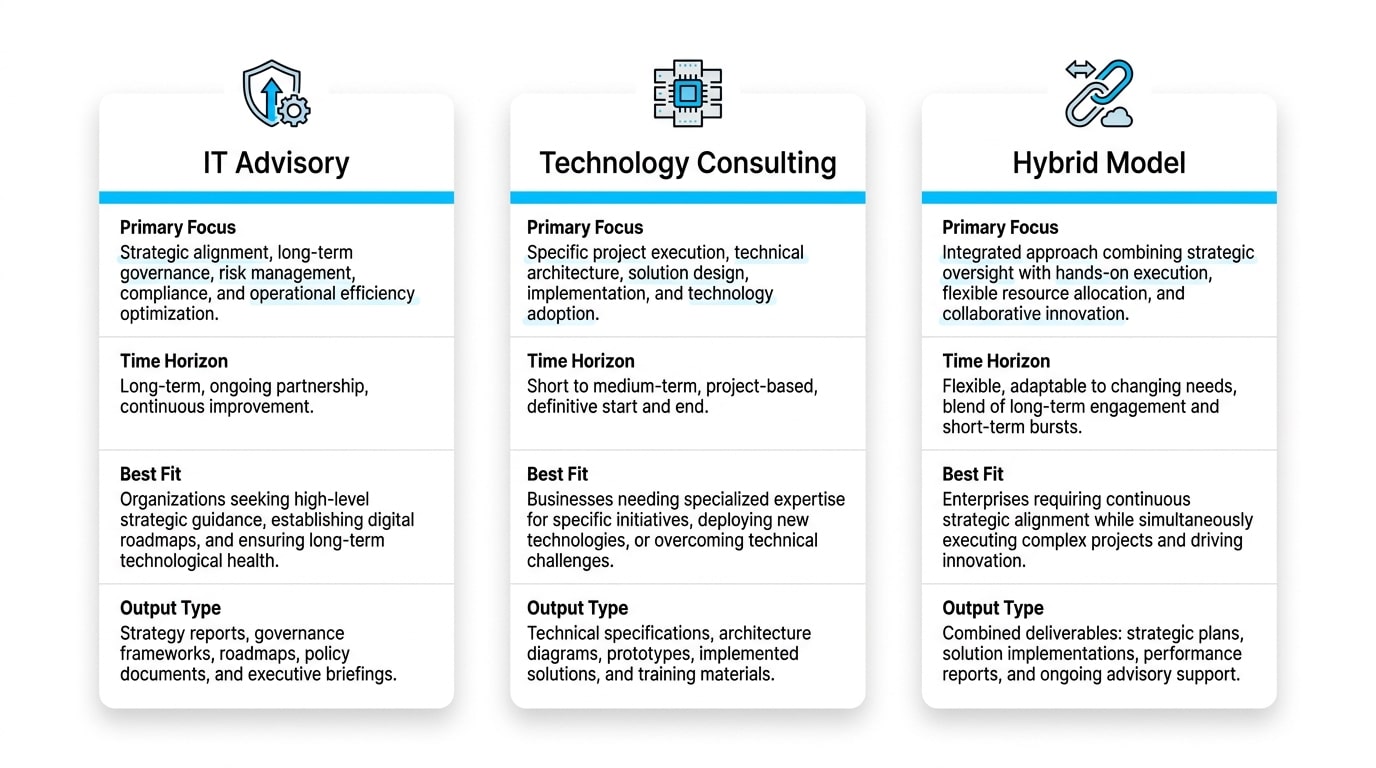
IT advisory often focuses on high-level governance, policy, and ongoing executive guidance — the “hand on the wheel” approach. Technology consulting, by contrast, dives deeper into architecture, product engineering, and hands-on delivery for defined initiatives. Scaleups typically need both: advisory for continuity and direction, consulting for sharp, time-boxed transformations.
The most effective engagements blend the two — starting with a focused strategy sprint, then transitioning into a lighter advisory cadence to monitor KPIs, manage vendors, and re-prioritize quarterly as the business changes. Understanding the distinction helps you scope the right engagement before you sign anything.
Comparing Engagement Types at a Glance
| Dimension | IT Advisory (Retainer) | Technology Consulting (Project) | Hybrid Model |
|---|---|---|---|
| Primary Focus | Governance, direction, oversight | Defined deliverables and architecture | Sprint + ongoing guidance |
| Time Horizon | Continuous | Fixed scope (4–16 weeks) | Sprint then monthly cadence |
| Best Fit | Multi-vendor coordination | Cloud migration, modernization, MVP | Scaleups balancing growth and risk |
| Output Type | Decisions, RACI, KPIs | Roadmap, target architecture, plans | Both — with transition plan |
The hybrid model is increasingly the default for scaleups. A focused strategy sprint establishes direction fast, while a lean retainer keeps priorities calibrated as market conditions shift — without the overhead of a full-time engagement.
When Is the Right Time to Bring in an External Consultant?
The clearest triggers are business signals, not technical ones: stalled growth, cloud costs climbing faster than revenue, repeated missed release dates, or security incidents that keep recurring. Other moments include preparing for due diligence, entering a regulated market, or scaling a product that was built quickly but not built to last.
External expertise acts as a force multiplier — your team keeps shipping while a partner handles the heavy diagnostic, architectural, and prioritization work in parallel. Regulators repeatedly emphasize that digital transformation increases IT risk exposure, which is precisely why outside specialists earn their keep during inflection points.
- Growth has plateaued despite product investment
- Cloud spend is rising faster than active user growth
- Release dates are consistently missed by two or more weeks
- Security or compliance incidents are recurring
- A funding round or M&A event is on the horizon
- Architecture decisions are being relitigated every quarter
- More than 50% of engineering effort goes to maintenance
- Onboarding a new engineer takes more than four weeks
- Deployment frequency has dropped below once per sprint
- No documented target architecture exists for the next 18 months
What Does the Lifecycle of a Successful Engagement Look Like?
A strong engagement runs in four connected phases, each producing artifacts the next phase depends on. The discipline is what separates strategy decks that gather dust from roadmaps that ship.
Phase 1 — Discovery and Current State Assessment
This phase maps systems, processes, costs, risks, and team capabilities. State auditors have repeatedly shown that missing control gaps in technology environments create downstream risk and waste, which is why discovery is non-negotiable before any roadmap is drawn. Expect structured interviews, system inventory, cost analysis, and a written findings report that names specific gaps and risks — not generic observations.
Phase 2 — Target State and Architecture Planning
Here you define the “to-be”: principles, integration patterns, data flows, security baseline, and platform standards. The target state is opinionated but pragmatic — it accounts for your team’s reality, not a textbook ideal. Every architectural decision is documented with rationale so your engineers can defend it months later without calling the consultant back.
Phase 3 — Prioritization and the Strategic Roadmap
Initiatives are scored by value, risk, effort, and dependencies, then sequenced into quarterly waves with quick wins included to build momentum. The output is a prioritized backlog of initiatives — not a wish list — with owners, dependencies, and success criteria assigned to each item.
Phase 4 — Implementation Oversight and KPI Monitoring
Execution is governed through a lightweight cadence: steering reviews, KPI dashboards, and continuous re-prioritization as conditions change. A strong partner will flag when a KPI is not moving and propose a corrective action — that accountability is one of the clearest differentiators between consultants who deliver and those who disappear at handover.
What Deliverables Should You Expect From a Quality Engagement?
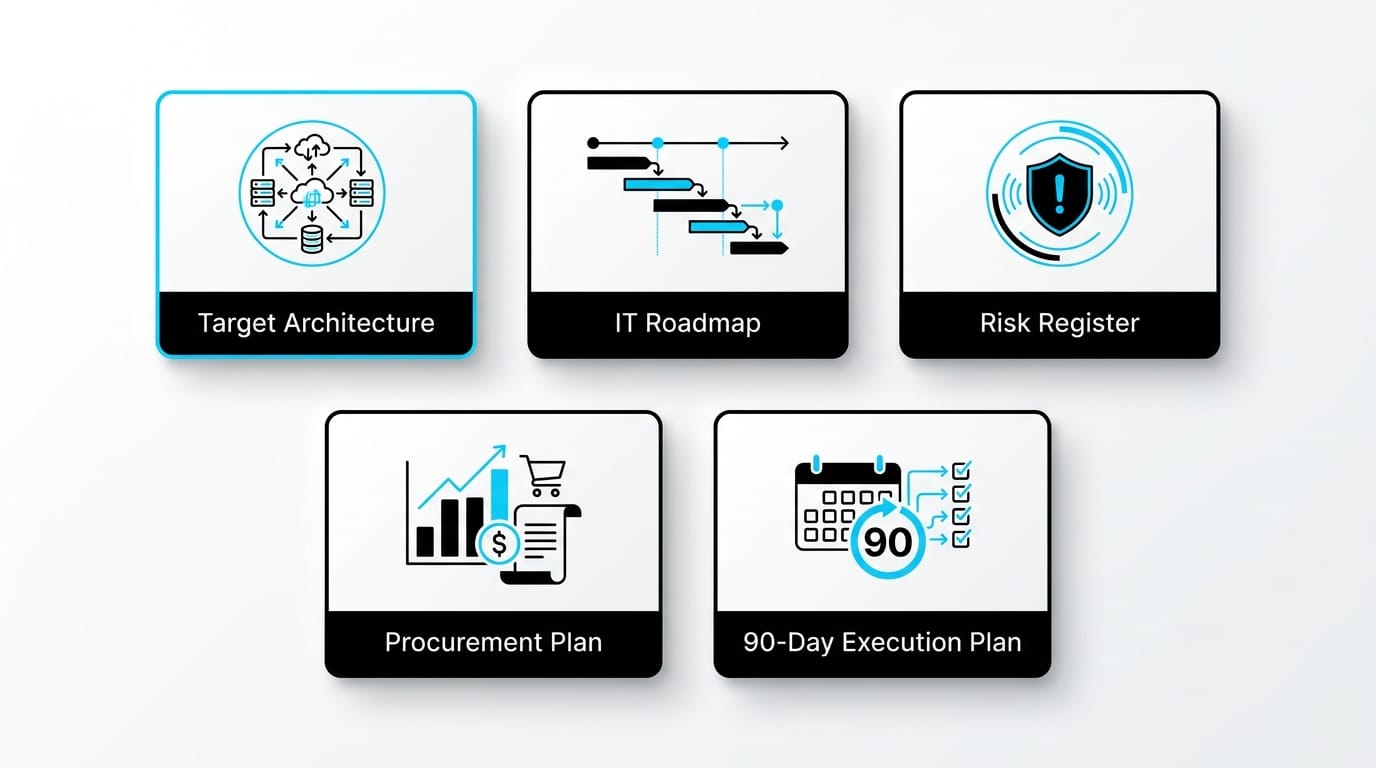
Deliverables must be actionable for the people who will execute them. Expect a documented target architecture, a prioritized IT roadmap with effort and impact scoring, a risk register with mitigation plans, a budget-optimized procurement view, and a 30/60/90-day execution plan. You should also receive governance artifacts — RACI charts, decision logs, and a Definition of Done — that prevent decisions from being relitigated every month.
The test is simple: a strong deliverable can be picked up by your engineering lead and turned into sprint work without translation. If it requires the consultant to explain it in a follow-up call, the handover has already failed.
According to DORA research, elite-performing engineering teams deploy on-demand — multiple times per day — while low performers deploy monthly or less. A well-structured technology roadmap that reduces batch size and clarifies ownership is one of the most direct levers for improving deployment frequency.
How Do You Build a Technology Strategy That Actually Scales?
A real technology strategy is not a static document — it is a living set of decisions about buy-vs-build, integration capability, data ownership, and platform choices. It anchors core capabilities (data, security, integration, observability) and connects them to business outcomes like revenue growth, retention, or operational efficiency. The best strategies leave room for change: they define principles that hold even when specific tools shift.
Balancing Value, Risk, and Effort
Every initiative should be evaluated on three axes simultaneously. High-value, low-effort items become quick wins that build team confidence and demonstrate momentum to stakeholders. High-value, high-risk items get phased pilots with defined go/no-go gates. This is the heart of strategic roadmap planning — making sure new product investments earn their place rather than crowding out essential platform work that keeps the lights on.
Managing Inter-departmental Dependencies
Roadmaps fail when dependencies between teams, systems, and vendors are invisible. Mapping them early — and assigning clear owners with documented interfaces — is what turns a wishlist into a plan. A dependency that surfaces in week eight of an execution sprint could have been resolved in week two of discovery, if anyone had mapped it.
How Do Technology Consulting Services Improve ROI?
Returns come from three places: cutting waste, reducing risk, and accelerating delivery. Consultants identify duplicate tools, optimize licensing, apply FinOps practices to maximize cloud value, and shift budget from “Run” to “Change.” They also reduce the cost of delay — the hidden tax that every postponed feature or unresolved bug imposes on revenue.
The right metrics make the value visible: cloud spend per active customer, lead time per release, percentage of engineering effort on new value versus maintenance, and reduction in critical production incidents quarter over quarter. When those numbers move in the right direction, the engagement pays for itself — typically within the first two quarters of execution against the roadmap.
The cost of delay is rarely tracked but frequently decisive. A feature that generates $50,000 in monthly revenue costs $600,000 per year in foregone value if it sits in the backlog twelve months longer than necessary. Prioritization frameworks that surface these costs explicitly help leadership make faster, better-informed decisions about where to invest engineering capacity.
How Does Consulting Reduce Security and Compliance Risk?
Strong consultants embed security by design rather than bolting it on later. They translate regulatory requirements into engineering work — controls, policies, monitoring, and incident response — and align them with the target architecture from the start. This means security decisions are made alongside architectural decisions, not retrofitted after the fact at significant additional cost.
The principle is consistent across regulators: the responsibility for managing risk stays with the organization, even when systems run in the cloud or with third-party vendors. A clear risk register, documented controls, and tested response procedures move security from an anxious afterthought to a managed, measurable discipline that your team owns and your auditors can verify.
How Do You Avoid Vendor Lock-In and Protect Long-Term Agility?
Lock-in happens quietly — through proprietary data formats, deeply embedded SDKs, or contracts that make migration economically painful. Protecting against it means owning your deliverables, designing for portability where it matters, and maintaining a documented exit plan for critical platforms — even platforms you have no current intention of leaving.
A neutral consultant evaluates alternatives transparently, prefers open standards where appropriate, and ensures knowledge transfer is built into every engagement so your team is never dependent on a single external brain. The goal is to leave your organization more capable and more independent than it was before the engagement started — that is the mark of a genuine boutique partner rather than a dependency-creating consultancy.
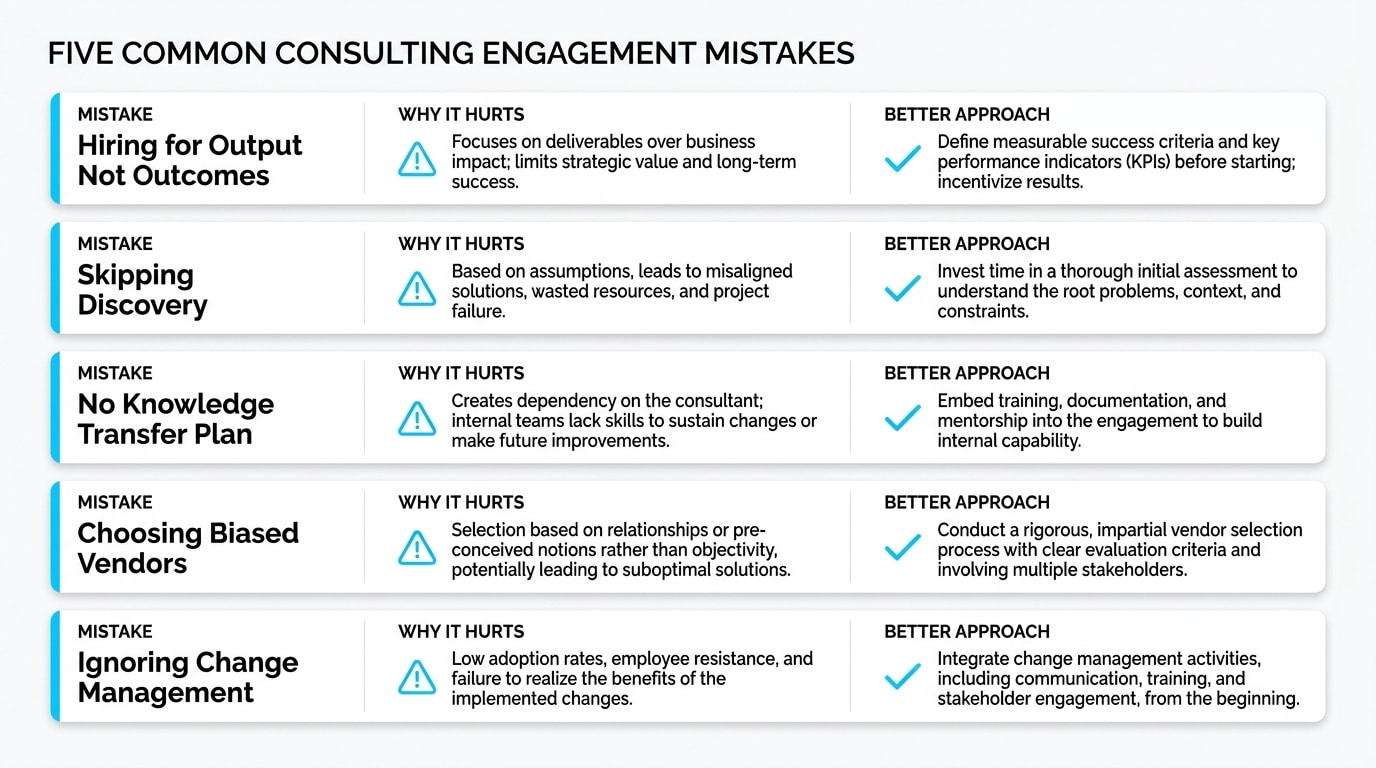
Common Mistakes to Avoid When Engaging a Consulting Partner
| Mistake | Why It Hurts | Better Approach |
|---|---|---|
| Hiring for output, not outcomes | You get decks, not results | Define KPIs before kickoff |
| Skipping discovery | Roadmap built on assumptions | Invest in a current-state audit |
| No knowledge transfer plan | Dependency on the consultant | Bake handover into every phase |
| Choosing biased vendors | Recommendations favor their stack | Demand platform-neutral analysis |
| Ignoring change management | Adoption stalls inside the company | Pair tech change with team enablement |
What Pricing Models Should You Expect?
Three structures dominate the market. Fixed-scope projects suit defined deliverables like an assessment, a target architecture, or a roadmap — predictable cost, predictable output. Hourly or time-and-materials engagements fit ambiguous, exploratory work but require tight governance to avoid scope creep. Monthly retainers fit ongoing advisory, fractional CTO support, or long-running governance roles where continuity matters more than a specific end date.
The smartest scaleups often combine them: a fixed-scope strategy sprint to set direction, followed by a lean retainer to maintain momentum, govern execution, and adjust priorities each quarter. This structure keeps costs predictable while preserving the flexibility to respond as the business evolves — a pattern that aligns naturally with how Sentice structures most long-term partnerships.
Whichever model you choose, insist on a clear change-control process. Scope creep is the single most common reason fixed-scope projects overrun on time and cost — and a well-defined change-control clause protects both sides from misaligned expectations.
How Sentice Maps Business Needs to Real Outcomes
As a boutique tech partner, Sentice works best when the engagement is outcome-oriented from the first conversation. The table below maps common scaleup needs to the specific way an embedded, senior-led team closes the gap between ambition and execution.
| Business Need | How a Boutique Partner Helps in Practice |
|---|---|
| Scaling engineering capacity without losing speed | Embedded, senior-led teams that integrate with your existing developers and maintain your deployment frequency through the transition |
| Translating founder vision into a buildable plan | Strategy sprints that produce a prioritized roadmap, target architecture, and 90-day execution plan your engineers can act on immediately |
| Reducing risk in cloud and security decisions | Platform-neutral assessments with documented controls, risk registers, and exit plans for every critical platform |
| Shipping a product faster without compromising quality | End-to-end product delivery aligned to business KPIs — lead time, deployment frequency, and incident rate — not vanity metrics |
| Maintaining direction between major projects | Lightweight advisory retainer with quarterly re-prioritization so momentum does not stall between delivery waves |
How Do You Measure Success of a Consulting Engagement?
Tie every engagement to business and operational KPIs from day one. On the business side: revenue enablement from new features, time-to-market for key capabilities, customer-impacting incidents avoided, and unit economics improvements like cloud cost per active user. On the operational side: lead time per change, deployment frequency, mean time to recovery (MTTR), and percentage of engineering effort spent on new value versus maintenance.
If a metric does not move in the right direction within the first two quarters of execution, that is a signal to revisit the root cause — whether that is the roadmap, the prioritization, the team’s capacity, or the engagement model itself. A strong partner welcomes that accountability and brings data to every steering review rather than waiting to be asked.
- Revenue enabled by new features shipped
- Time-to-market for key product capabilities
- Cloud cost per active user (month over month)
- Customer-impacting incidents per quarter
- Engineering capacity freed from maintenance work
- Lead time per change (DORA metric)
- Deployment frequency (DORA metric)
- Mean time to recovery (MTTR)
- Change failure rate
- Percentage of effort on new value vs. run-the-business
Frequently Asked Questions
What is the difference between technology consulting and managed services?
Consulting focuses on strategy, architecture, and decision-making — it is time-bounded and outcome-oriented. Managed services focus on operating systems day-to-day on an ongoing basis. Many companies use both: consulting to design the right environment, and managed services to run it once it is built. The two are complementary, not competing.
How long does a typical engagement last?
A focused current-state assessment runs four to six weeks. A full strategy and roadmap engagement typically takes eight to twelve weeks. Ongoing advisory retainers run quarterly or annually, depending on the scope of governance and the pace at which the business is evolving. Most scaleups find a combination of a fixed-scope sprint followed by a quarterly retainer to be the most cost-effective structure.
Can technology consulting work for early-stage startups?
Yes. Early-stage teams benefit from short, sharp engagements that prevent expensive architectural mistakes and align technology choices with funding milestones rather than over-engineering for scale they have not yet reached. A four-week architecture review before the first engineering hire can save six months of refactoring twelve months later.
How do we know recommendations are objective?
Insist on platform-neutral analysis, written rationale for every major decision, and the option to evaluate at least two alternatives for any critical platform choice. A genuinely objective partner will document why they did not recommend a particular tool as clearly as why they did recommend one. Documented reasoning is your safeguard against biased advice.
What should we prepare before a discovery call?
A clear statement of your business goals for the next twelve months, your top three operational pain points, an approximate budget range, and a list of critical systems and vendor relationships. That context lets the first conversation move from generic to specific — and lets a prospective partner tell you quickly whether they are the right fit for your situation.
Does consulting replace our internal team?
No. The goal is to amplify your team — provide senior expertise where it is needed, accelerate decisions that are stalling, and transfer knowledge so your internal engineers grow through the engagement rather than being sidelined by it. A good partnership leaves your internal team stronger, more confident, and more capable than it was before the engagement began.
How do boutique tech partners differ from large consultancies?
Boutique partners like Sentice embed senior practitioners — not junior analysts supervised from a distance — directly into your product organization. Engagements are culture-aligned and end-to-end: the person who runs discovery is also accountable for the roadmap and the delivery governance. Large consultancies often rotate staff and separate strategy from implementation, which creates handover risk and dilutes accountability.

Sentice is a boutique tech partner that builds custom software solutions for startups and scaleups. We embed senior engineers into your product organization as a real extension of your team — culture-aligned, end-to-end, and committed to your roadmap.