

Software Project Management Services: A Complete Guide for Scaleups
Turn ambitious technical roadmaps into predictable, on-time delivery with professional project management built for scaleup velocity.
- Professional software project management bridges technical execution and business outcomes, preventing “busy without progress” delivery patterns at scaleups.
- Tangible governance artifacts — charters, RAID logs, sprint plans, and release playbooks — give leadership the visibility to make confident decisions at every stage.
- Outsourced project management paired with embedded engineering teams removes vendor-coordination friction and accelerates time from idea to release.
- Rigorous change control and clear acceptance criteria are the single most effective defence against scope creep and budget overruns.
- The right KPIs — predictability, cycle time, defect leakage, and stakeholder NPS — tell you whether your delivery engine is improving over time.
- A fractional PM engagement can deliver immediate structure and momentum without the months-long lag of recruiting and ramping a full-time hire.
Table of Contents
- The Role of Software Project Management Services
- What Software Project Management Services Include
- Minimizing Execution Risk and Avoiding Project Delays
- Outsourced Project Management vs. In-House Leadership
- Pricing Structure for Professional PM Services
- Criteria for Selecting a Project Management Partner
- Project Management vs. Development Management
- Agile vs. Waterfall: Adapting to Your Project
- Preventing Scope Creep through Rigorous Change Control
- How to Measure PM Success (Key Performance Indicators)
- The Onboarding Process for Effective Project Delivery
- The Integration of PM Services with QA and Infrastructure
- Choosing Between Fractional and Full-Time PM Involvement
- Effective Stakeholder and Communication Management
- Sentice Capabilities Mapped to Your Business Needs
- Common Mistakes Companies Make Before Hiring PM Services
- Questions to Ask Before Starting Your Project
- Launching Your Project with a Strategic Approach
- Frequently Asked Questions
In today’s fast-moving software landscape, scaleups and established companies share a common hurdle: turning ambitious technical roadmaps into shipped products without burning capacity, missing deadlines, or compromising quality. Many leadership teams discover that engineering talent alone is not enough — what’s missing is the connective tissue that aligns scope, people, and business goals. That’s where professional software project management services come in. They translate complex technical work into predictable delivery, giving CEOs and CTOs the visibility they need to make confident decisions.
Throughout this guide, you’ll see how a boutique partnership model brings structure, transparency, and momentum to your projects, so your team can focus on building rather than firefighting. Sentice works as a true extension of your team — culture-aligned, end-to-end, and committed to the delivery outcomes that actually move your business forward.
The Role of Software Project Management Services
Software project management services exist to bridge the gap between technical execution and business outcomes. They are far more than scheduling tools or status meetings — they are the operational backbone that governs scope, risk, stakeholder alignment, and quality across the entire delivery lifecycle. When you partner with a team that owns end-to-end software development, project management becomes embedded in every stage, from discovery through launch.
This means decisions are not made in isolation; they are weighed against business priorities, technical constraints, and timeline realities. For scaleups, this approach prevents the common trap of “busy without progress” and ensures every sprint moves the company closer to a measurable business goal.
Controls what is built, in what order, and to what standard — preventing the silent accumulation of “small” additions that derail timelines and inflate budgets.
Identifies and tracks risks, assumptions, issues, and dependencies so that blockers are surfaced early — before they compound into budget-busting surprises.
Keeps decision-makers informed and engaged through structured reporting, steering cadence, and transparent dashboards — so projects never stall waiting for approvals.
What Software Project Management Services Include (Deliverables)
The real value of professional project management lies in tangible governance artifacts — documents and rituals that create visibility for everyone involved. Without these deliverables, projects drift; with them, leadership always knows where things stand and what to expect next. A good partner produces standardized outputs that cover initiation, execution, and release.
Project Initiation Deliverables
The kickoff phase establishes the foundation. Expect a Project Charter that defines objectives, success criteria, and decision-makers, alongside a Roadmap that maps milestones to business outcomes. A stakeholder map and an initial RAID log (Risks, Assumptions, Issues, Dependencies) ensure that nothing critical is left implicit. These artifacts protect the project from ambiguity from day one.
Execution and Delivery Controls
During execution, deliverables shift toward control and momentum. Sprint plans, prioritized backlogs, weekly status reports, burn-down charts, and updated risk registers form the heartbeat of delivery. The goal isn’t documentation for its own sake — it’s keeping cadence predictable and surfacing blockers early so the team can keep moving.
A weekly one-page status report — covering progress, risks, decisions needed, and next-week priorities — is often the single highest-value artifact a PM produces. It forces clarity, aligns leadership, and creates an audit trail that protects the team when scope disputes arise.
Release and Launch Readiness
Approaching launch, the deliverables shift again: release plans, cutover playbooks, UAT scripts, acceptance criteria checklists, and a hypercare schedule. These ensure that go-live is a controlled event, not a leap of faith. A well-run release phase protects the user experience and preserves the credibility the team has built throughout delivery.
Minimizing Execution Risk and Avoiding Project Delays
Most software projects don’t fail because of one big problem — they fail because small risks compound silently. Excellent project delivery treats risk as a first-class citizen. Through structured RAID logs, weekly risk reviews, and dependency tracking, a project manager keeps small issues from becoming budget-busting surprises.
Government frameworks for project initiation, such as the official Project Initiation phase and project approval gate guidance, reinforce a simple truth: clarity at the start — stakeholders, alternatives, security needs, integrations — dramatically reduces downstream risk. Boutique partners apply the same rigor in a leaner, faster way that fits scaleup velocity.
- Undefined or frequently shifting acceptance criteria
- External dependencies with no confirmed timeline
- Missing stakeholder sign-off on scope before sprint start
- Backlog items that span more than one sprint without decomposition
- Integration points with third-party systems not yet tested
- Weekly RAID log reviews with the full project team
- Escalation thresholds defined before the project starts
- Buffer sprints built into every major milestone gate
- Dependency owners named and committed in writing
- Change control workflow approved by all stakeholders at kickoff
Outsourced Project Management vs. In-House Leadership
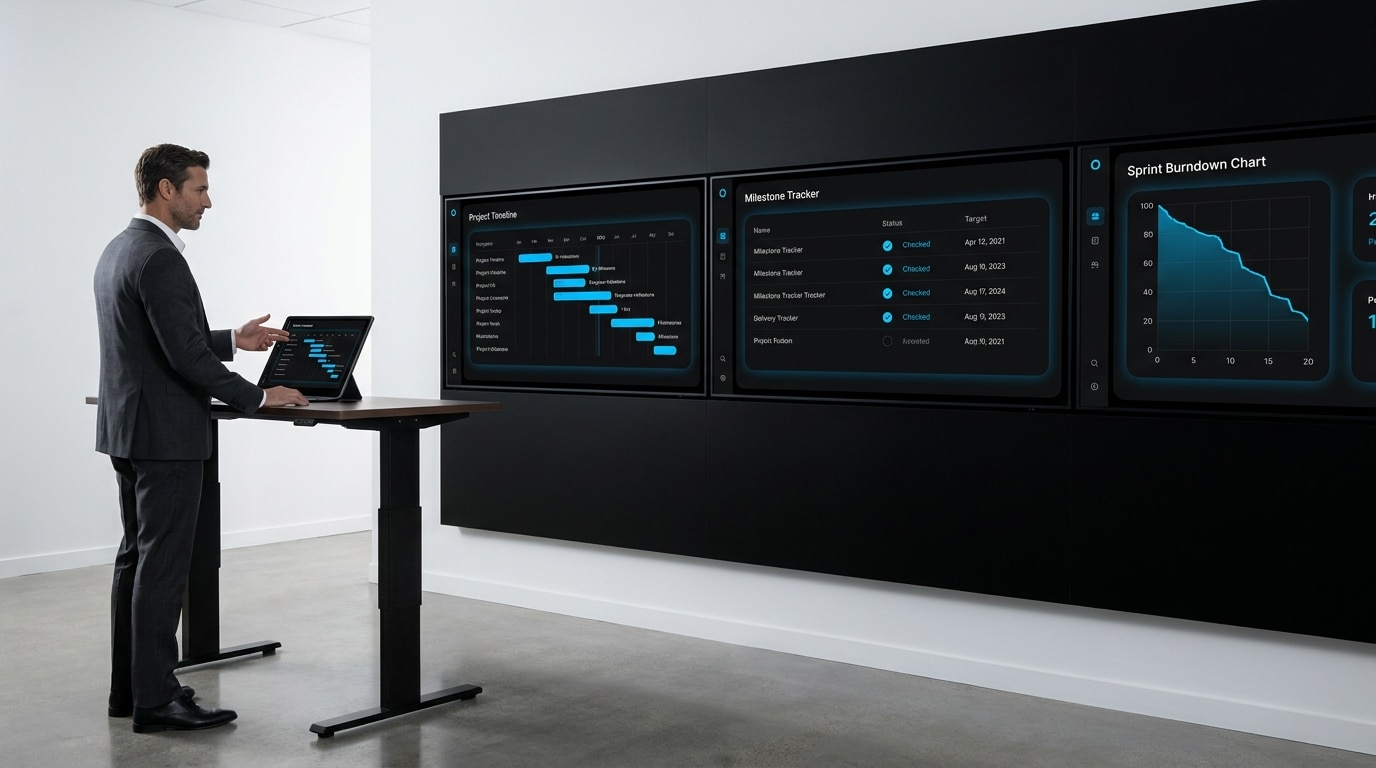
Should you hire a full-time PM or work with a partner? The answer depends on speed, expertise, and neutrality. An internal hire builds long-term institutional memory but takes months to recruit and ramp — time that fast-moving scaleups rarely have. An outsourced partner brings proven methodologies, immediate capacity, and unbiased oversight from day one.
When project management is paired with dedicated engineering teams, the synergy multiplies — your PM understands the engineers because they share the same operating culture, standards, and communication rhythm. For scaleups under pressure to deliver, this combination removes the friction of coordinating across multiple vendors and shortens the path from idea to release.
An outsourced PM who has worked across dozens of scaleup engagements brings pattern recognition that an internal hire cannot replicate for months. They have seen the same failure modes before — and know exactly which intervention to apply and when. That institutional knowledge compounds into faster, safer delivery for your team.
Pricing Structure for Professional PM Services
Pricing for software project management services varies, but the underlying goal is always the same: predictability. Whether you choose a fixed-price engagement, a monthly retainer, or a time-and-materials arrangement, the model should match the certainty of your scope and the pace of change in your business.
Common Engagement Models
Project-based pricing fits well-defined initiatives with stable scope — think a migration, an integration, or a defined MVP. Fractional retainers suit ongoing programs where you need a senior PM presence a few days a week to govern multiple workstreams. Time-and-materials offers maximum flexibility for discovery-heavy projects with high uncertainty, where requirements are expected to evolve significantly before they stabilize.
The Cost of Poor Management
The hidden cost of skipping professional management is rarely a line item, yet it dwarfs the price of a good PM. Scope creep, rework, missed deadlines, broken integrations, and team burnout all stem from weak governance. Calculate the cost of a three-month delay or a botched release, and the ROI of a competent PM becomes immediately obvious. A single avoided sprint of rework typically pays for weeks of senior PM time.
Criteria for Selecting a Project Management Partner
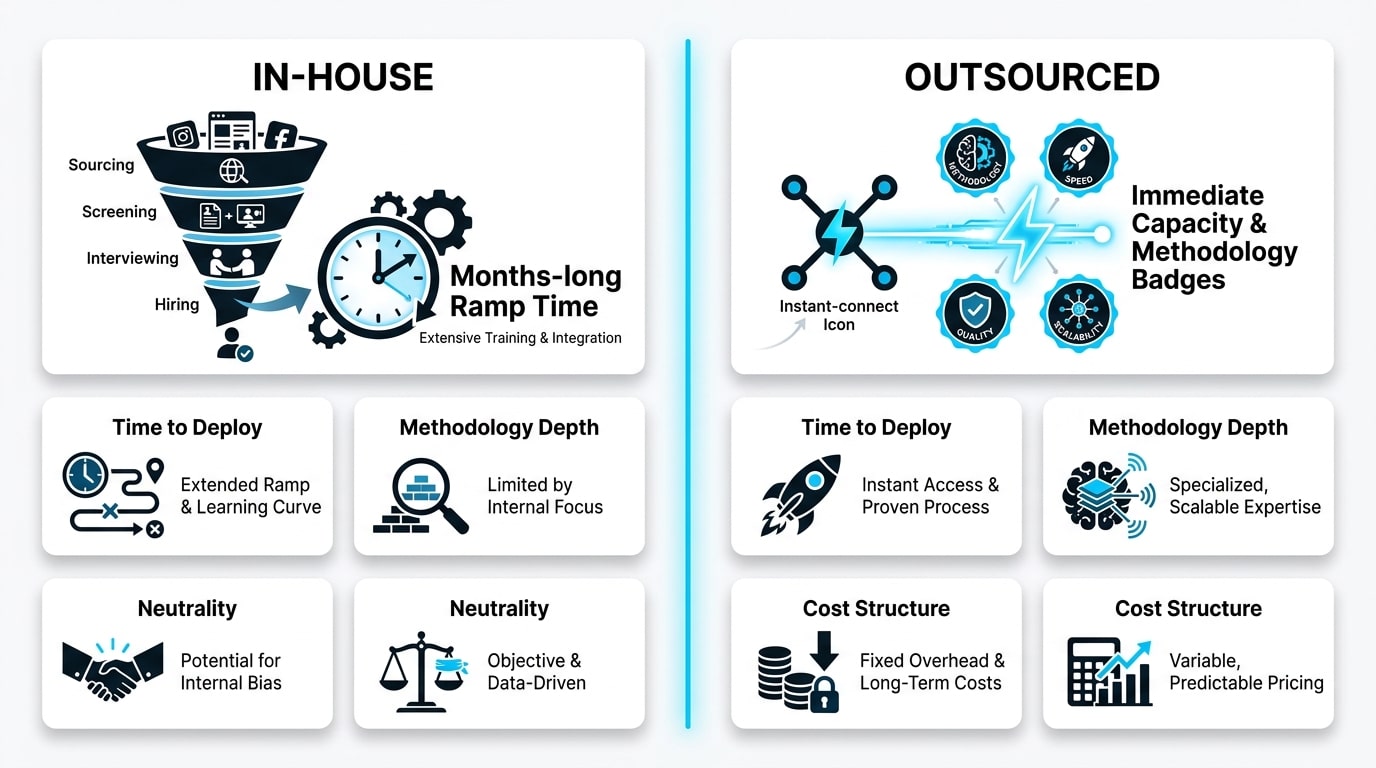
Choosing a partner should be evidence-based, not pitch-based. Ask for sample status reports, anonymized RAID logs, and references from companies of similar size and complexity. Verify experience with your specific tech stack, your industry’s compliance demands, and distributed team coordination. Confirm that the partner has clear escalation paths, change-control workflows, and KPIs they actively measure.
Professional certifications, such as those listed by PMI Israel’s PMP program, signal a baseline of methodology fluency, but real-world delivery evidence matters more than credentials alone.
| Selection Criterion | What to Look For | Why It Matters |
|---|---|---|
| Process maturity | Standardized templates, RAID, change control | Predictable execution from day one |
| Technical fluency | Direct experience with your stack | PM can challenge estimates intelligently |
| Reporting standards | Sample weekly and steering reports | Transparency for executive decisions |
| Communication cadence | Defined rituals and escalation paths | No surprises, no stagnation |
| References | Comparable scaleup case studies | Proof of fit, not theory |
Project Management vs. Development Management
It’s a common mistake to treat these roles as interchangeable. A Project Manager owns scope, schedule, cost, risk, and stakeholders — the “what” and “when” of delivery. A Development Manager (or Engineering Manager) owns code quality, architecture decisions, engineering standards, and team practices — the “how.” In high-performing organizations, both roles exist and collaborate tightly.
A boutique partner that delivers both functions internally removes coordination overhead and ensures decisions are made with full context, not in silos. When the PM and engineering lead share the same operating model and reporting line, handoff friction disappears — and your product moves faster as a result.
According to DORA research, elite software delivery teams deploy to production multiple times per day and recover from incidents in under one hour. Achieving these metrics requires not just engineering excellence but also tight project and development management working in lockstep — a combination that a well-structured boutique engagement is designed to deliver.
Agile vs. Waterfall: Adapting to Your Project
The Agile-versus-Waterfall debate is largely outdated. Modern scaleups succeed with hybrid approaches that combine the discipline of milestone planning with the responsiveness of iterative sprints. Use fixed gates for regulatory checkpoints, contract milestones, or hardware dependencies; use iterative sprints for feature development where requirements evolve and user feedback matters.
The methodology should serve the project — not the other way around. A skilled PM tailors the process to the realities of your team, scope, and risk profile. Forcing a rigid framework onto a team that doesn’t fit it generates overhead without adding value. The goal is delivery cadence, not methodology compliance.
Preventing Scope Creep through Rigorous Change Control
Scope creep is the silent killer of software projects. Every “small addition” carries hidden costs in time, testing, and integration. Rigorous change control protects momentum without blocking innovation — it simply ensures that every change is a deliberate decision, not a casual request that quietly destabilizes the timeline.
Defining User Stories and Acceptance Criteria
Clear user stories with explicit acceptance criteria create a shared definition of “done.” When everyone agrees on what success looks like before development starts, debates about completeness disappear and rework cycles shrink dramatically. This single practice, consistently applied, is one of the highest-leverage investments a PM team can make in a scaleup delivery program.
Managing Modification Impact
Every change request should trigger a short impact analysis: What does it cost in time, budget, and risk? Who must approve it? Documenting this workflow ensures changes are deliberate decisions — not casual additions that quietly destabilize the timeline and erode team morale over weeks of accumulated rework.
How to Measure PM Success (Key Performance Indicators)
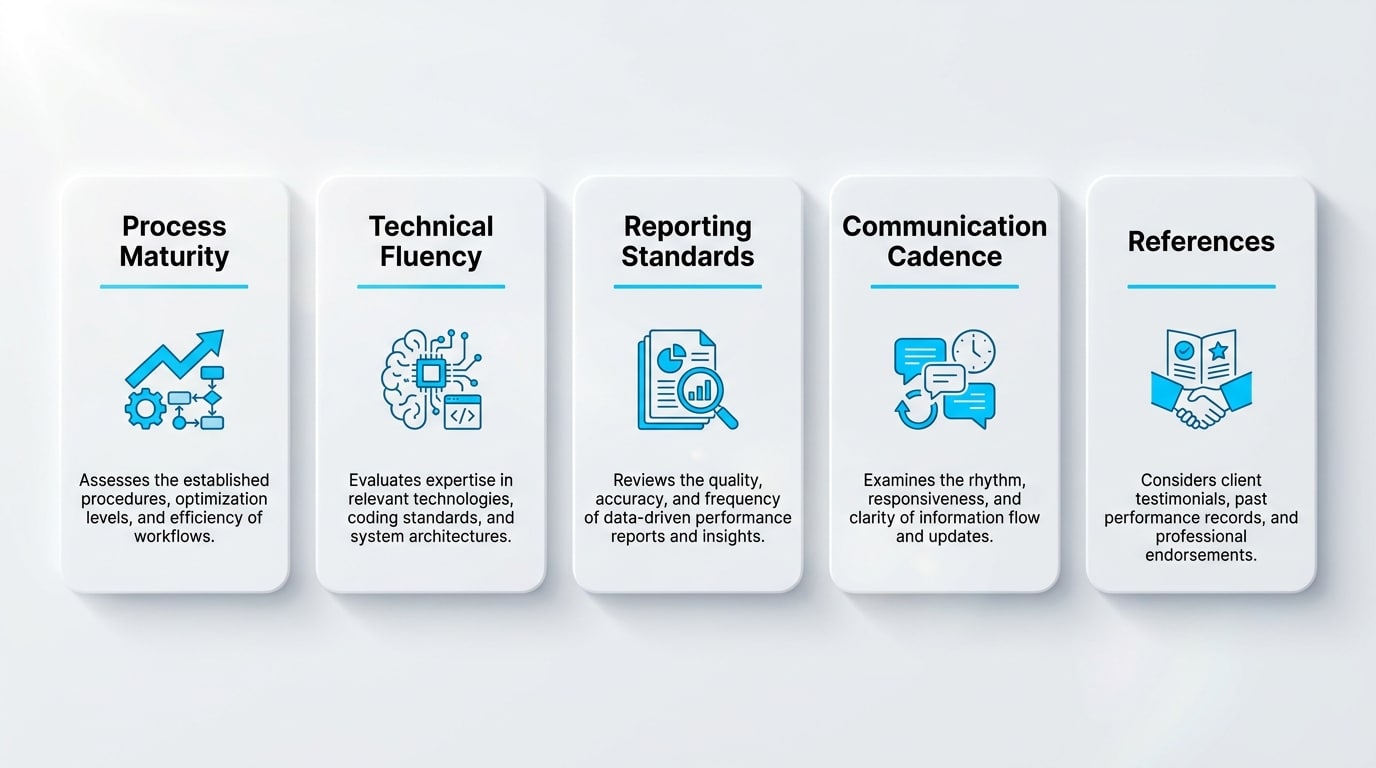
Without metrics, project management becomes opinion. Professional services bring a measurable framework that ties activity to outcomes. The right KPIs reveal whether your delivery engine is improving over time — and give leadership the confidence to make commitments to investors, customers, and the board.
| KPI | What It Measures | Why It Matters |
|---|---|---|
| Predictability | Forecast accuracy vs. actual delivery | Confidence in roadmap commitments |
| Cycle Time | Time from “in progress” to “done” | Efficiency of the delivery flow |
| Defect Leakage | Bugs escaping to production | Quality of integrated process |
| On-Time Milestone Rate | Percentage of milestones hit on date | Discipline and risk management |
| Stakeholder NPS | Internal satisfaction with delivery | Trust and partnership health |
The Onboarding Process for Effective Project Delivery
The first weeks of an engagement set the tone for everything that follows. A well-designed onboarding plan creates trust quickly and accelerates time-to-value. The goal is not to spend weeks in workshops — it’s to be useful fast, while building the foundations that sustain delivery over the long term.
Weeks 1–2: Alignment and Audit
Discovery focuses on listening: stakeholder interviews, current-state audits, backlog reviews, and identification of immediate risks. The output is a 30/60/90 plan that aligns leadership on priorities and quick wins. By the end of week two, the team should have a clear picture of where the biggest risks and opportunities lie.
Weeks 3–6: Establishing Cadence
Routines take hold — standups, planning sessions, demos, retrospectives, and weekly status reports. Dashboards go live, KPIs are baselined, and the team starts building rhythm and predictability. By week six, the engagement should feel embedded rather than external — a true extension of your team rather than an outside consultant.
Launch and Stabilization
As release approaches, attention shifts to UAT, cutover planning, and a defined hypercare period after go-live to handle any post-launch issues quickly. This protects the user experience and the team’s reputation — and ensures the project closes cleanly rather than trailing off into a long tail of unresolved issues.
The Integration of PM Services with QA and Infrastructure
Modern delivery isn’t just code — it’s code that’s tested, secure, deployable, and observable. A skilled PM enforces a Definition of Done that includes automated tests, CI/CD validation, security scans, and rollback plans. This integration prevents the classic “we’re done coding but not done shipping” trap that costs teams weeks of post-sprint scrambling.
Resources like the government project management course emphasize this integrated approach across quality control, risk, and team management — principles that apply equally to private-sector scaleups building production-grade software at speed.
A robust Definition of Done for a scaleup engineering team typically includes: all acceptance criteria met, automated tests passing at the required coverage threshold, security scan completed with no critical findings, infrastructure changes reviewed, documentation updated, and product owner sign-off obtained. A PM who enforces this consistently eliminates the most common sources of post-release incidents.
Choosing Between Fractional and Full-Time PM Involvement
Not every project requires a full-time PM. A fractional model — where a senior PM dedicates a few days per week — works well for stable projects, early-stage initiatives, or programs already running smoothly that need governance oversight rather than hands-on management. The cost is lower and the flexibility is higher.
Full-time involvement becomes essential when you have multiple parallel teams, tight deadlines, complex integrations, regulatory pressure, or recurring quality issues that demand continuous attention. The right partner helps you right-size the engagement and scale up or down as the project evolves — so you’re never paying for capacity you don’t need, and never short when the pressure builds.
- Single-team projects with stable, well-defined scope
- Early-stage initiatives still in discovery or pre-MVP
- Ongoing programs needing governance, not daily management
- Budget-constrained engagements where ROI must be immediate
- Teams with strong internal technical leads already in place
- Multiple parallel workstreams with inter-team dependencies
- Hard regulatory or contractual deadlines with no flex
- Complex third-party integrations requiring daily coordination
- Post-incident recovery programs needing rapid stabilization
- Programs where stakeholder trust has been damaged and needs rebuilding
Effective Stakeholder and Communication Management
Projects rarely stall because of technical problems alone — they stall because decisions don’t get made. A great PM acts as the project’s source of truth, keeping a stakeholder map, RACI matrix, and steering committee cadence active and current. Even when leadership changes or priorities shift, the project keeps moving because communication structures don’t depend on any single person.
This is one of the most underrated benefits of working with a boutique partner: institutional memory and disciplined communication, on demand. Your internal team is freed from the overhead of chasing approvals and managing upward — and can focus entirely on building the product.
Sentice Capabilities Mapped to Your Business Needs
To make the value tangible, here’s how a partnership-oriented model addresses the most common scaleup delivery challenges. The goal is not a feature checklist but a clear mapping from problem to practical support — so you can assess fit quickly and confidently.
| Business Need | How a Boutique Partner Helps |
|---|---|
| Accelerating roadmap delivery | Embedded PM and engineers aligned to your goals from day one — no ramp lag, no vendor coordination overhead |
| Visibility for executives | Standardized reporting, live KPI dashboards, and transparent steering cadence that keeps leadership informed without burdening the team |
| Predictable budgets | Flexible engagement models — project-based, fractional, or T&M — with clear scope governance and change-control workflows |
| Quality at speed | Integrated QA, security scanning, and DevOps practices unified under one enforced Definition of Done |
| Scaling capacity quickly | Senior, culture-aligned talent that ramps without the months-long overhead of traditional hiring or onboarding |
Common Mistakes Companies Make Before Hiring PM Services
Many teams underestimate how much groundwork makes an engagement successful. The most frequent mistakes include hiring a PM without defining success criteria upfront, assuming that methodology alone solves cultural friction, treating change control as bureaucracy instead of protection, and skipping the discovery phase to “save time.” Each of these pitfalls leads to slower delivery, not faster.
A trusted partner will surface these gaps early and help you address them before they become structural problems. The conversation about how to work together is just as important as the conversation about what to build — and it’s one that a boutique tech partner is well-positioned to lead.
The single most common reason PM engagements underdeliver is not the PM’s methodology — it’s the absence of a clear, shared definition of success at the start. Before bringing any partner on board, align your leadership team on three things: what a successful outcome looks like at 90 days, who has final decision authority on scope, and what the real hard deadline is and why. Everything else can be figured out together.
Questions to Ask Before Starting Your Project
Strong projects begin with strong questions. Before kickoff, clarify: What defines the MVP? What is the hard deadline, and why does that date matter to the business? Who has final authority to approve scope changes? What external dependencies could derail the timeline, and are those owners committed? What’s the required quality bar — commercial-grade, regulated, or experimental?
How will decisions be made when stakeholders disagree? Answering these honestly prevents the most common sources of project pain. A senior PM partner will guide you through this conversation as part of scoping — and the answers will shape every governance decision that follows.
- What does MVP mean — and who has final authority to define it?
- What is the hard deadline, and what is the business consequence of missing it?
- Which external dependencies are unconfirmed, and who owns resolving them?
- What quality bar is required — and how will it be measured and verified?
- How will scope change requests be evaluated, prioritized, and approved?
- What does a successful 30-day partnership look like from leadership’s perspective?
Launching Your Project with a Strategic Approach
The smartest way to begin is with a focused pilot: a defined scope, clear KPIs, and a 30-day plan that proves the partnership before scaling. Start small, grow fast. Audit the current state, set up a delivery dashboard, agree on reporting standards, and establish a change-control workflow that your whole team will actually follow.
Within weeks, you’ll see whether the partnership is delivering the predictability and momentum your business needs — and you can expand confidently from there. This approach minimizes commitment risk while accelerating time-to-value, and it’s exactly how a boutique tech partner should work: earning trust through demonstrated delivery, not through slide decks and promises.
Frequently asked questions
What is the difference between a software project manager and a Scrum Master?
A project manager owns the full delivery picture — scope, schedule, budget, risk, and stakeholders — across the entire project lifecycle. A Scrum Master is a team-level role focused on facilitating Agile ceremonies, removing impediments within the team, and coaching on Scrum practices. In larger projects, both roles complement each other rather than compete. The PM ensures the project is moving toward the right business outcome; the Scrum Master ensures the team is working as effectively as possible sprint to sprint.
Do PM services include technical documentation and architecture advice?
Project management services govern the process; technical documentation and architecture decisions typically belong to engineering leadership. However, when you work with a partner that delivers both PM and engineering services under one roof — as Sentice does — the two functions are coordinated without handoff friction. Your PM and your engineers share the same standards and communication rhythm, which means technical context informs governance decisions in real time rather than after the fact.
How can you recover a project that is already over budget and behind schedule?
Recovery starts with an honest audit: re-baseline scope against what is actually achievable, identify the top three risks driving the overrun, and re-prioritize the backlog around business value rather than original commitments. A senior PM typically stabilizes cadence within a few weeks by enforcing change control, cutting non-essential work, and rebuilding stakeholder trust through transparent and consistent reporting. The goal is not to promise recovery — it’s to create the conditions where recovery becomes possible.
Is it better to have a single PM for both development and QA teams?
For most scaleup-sized projects, yes. A single PM covering development and QA ensures the Definition of Done is enforced consistently and that quality isn’t treated as an afterthought bolted on at the end of each sprint. This unified ownership also makes it easier to surface and resolve the coordination gaps that typically cause defect leakage. For very large programs with multiple parallel workstreams, you may need a program manager coordinating multiple PMs — but the principle of unified quality governance remains.
What are the core differences between milestone-based and continuous delivery planning?
Milestone-based planning groups work into defined gates with formal acceptance criteria, suited to projects with regulatory, contractual, or hardware checkpoints where a specific version must be approved before the next phase begins. Continuous delivery planning ships small increments frequently — sometimes multiple times per day — suited to product development with evolving requirements and a need for fast user feedback. Most modern scaleup projects blend both approaches: fixed milestones for external commitments, continuous delivery for feature work within each milestone window.
Are project management services suitable for early-stage startups?
Yes, especially in fractional form. Even a few days a week of senior PM support helps early-stage teams avoid scope creep, communicate more credibly with investors, and build the delivery discipline they will need before scaling. The investment is small relative to the cost of a wasted sprint or a delayed fundraising round. Starting small with a trusted PM partner is one of the highest-leverage decisions an early-stage founding team can make.
How long does it take for a new PM engagement to show measurable results?
Most teams see visible improvements in reporting clarity and stakeholder confidence within the first two weeks — simply from having structured status updates and a maintained RAID log. Measurable delivery improvements, such as reduced cycle time and higher on-time milestone rates, typically appear within four to eight weeks once cadence rituals are established and change control is enforced consistently. The full impact on predictability and quality is usually clear by the end of a 90-day pilot engagement.
What should a project management partner’s first deliverable be?
The first deliverable should be a current-state audit and a 30/60/90-day delivery plan produced within the first two weeks. This artifact surfaces immediate risks, names the critical dependencies, aligns leadership on priorities, and gives the team a shared reference point for every decision that follows. If a partner’s first instinct is to start a lengthy methodology workshop rather than produce something useful quickly, that’s a signal worth paying attention to.

Sentice is a boutique tech partner that builds custom software solutions for startups and scaleups. We embed senior engineers into your product organization as a real extension of your team — culture-aligned, end-to-end, and committed to your roadmap.